Daihatsu Move Grade Guide: L vs X vs G vs RS — All Differences Explained
Japan's original tall-wagon kei car — fully decoded. The all-new 7th generation (2025) and the popular 6th generation (2014–2023) both covered. Sliding doors, DNGA platform, turbo RS, and everything importers need to know.
What Is the Daihatsu Move?
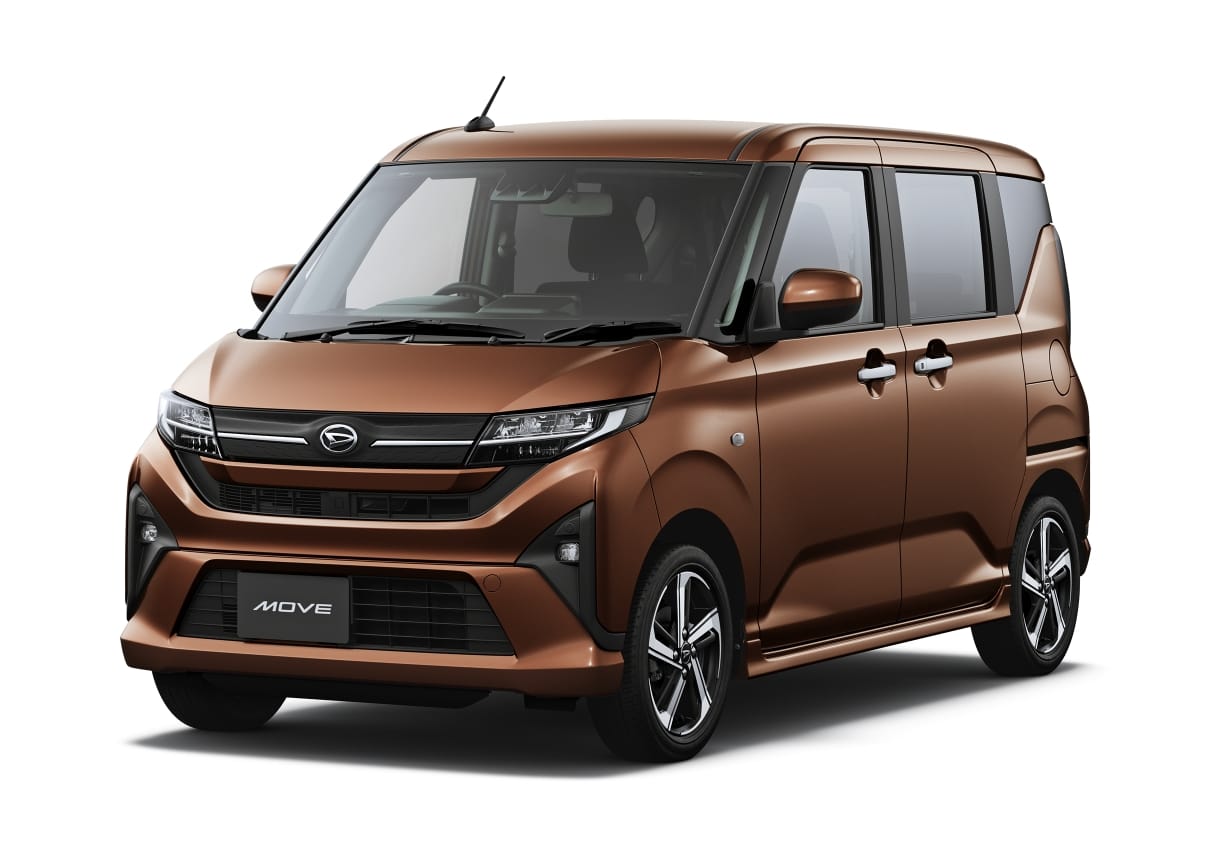
The Daihatsu Move holds a unique place in Japanese automotive history: it was the car that, alongside the Suzuki Wagon R, invented the "tallboy kei wagon" segment in 1995. By taking the chassis of the Mira subcompact and building a significantly taller body on top, Daihatsu created a kei car that felt roomier than anything in its class — standing, as its name implies, ready to move with you through every aspect of daily life.
Three decades and more than 3.4 million units later, the Move remains one of Japan's most recognisable kei cars. The 7th generation, launched on June 5, 2025 after a two-year absence caused by a safety testing scandal at Daihatsu, marks the most radical transformation in the nameplate's history: for the first time ever, the Move has rear sliding doors. Built on the DNGA platform, with four grades (L, X, G, RS), and powered by the same proven KF-series engines in NA and turbocharged form, the new Move sets out to prove that Daihatsu's return to the market is worth the wait.
For importers, the 6th generation (2014–2023, LA150S/LA160S) remains the primary vehicle available at Japanese auction. This guide covers both in full detail.
30 Years of History — Seven Generations
The Return — Why the Move Disappeared for Two Years
🔍 The Safety Test Scandal and Daihatsu's Comeback
In June 2023, Daihatsu Motor Co. discontinued the Move — along with several other models — following the revelation of a serious scandal involving rigged safety tests. An investigation revealed that Daihatsu had been falsifying collision safety test data and conducting irregular certification testing on numerous models over an extended period. Toyota, Daihatsu's parent company, suspended shipments while a full third-party investigation was conducted.
Daihatsu subsequently conducted a thorough internal reform, retested affected vehicles, and undertook a comprehensive reconstruction of its safety compliance systems. The 7th generation Move — built from the ground up on the DNGA platform with all new safety engineering — was the clearest signal of Daihatsu's return to the market. Launched June 5, 2025, the new Move incorporates up to 17 Smart Assist safety functions and underwent full proper certification. For importers, the 6th generation units produced before June 2023 are the primary stock available at auction and are not directly affected by the compliance issues that caused the production halt.
The 7th Generation (2025) — What's Completely New
The 7th generation Move (LA850S/LA860S) is not a continuation of the 6th generation — it is an entirely new vehicle on an entirely new platform, with a new body, new doors, and a new design language. Key changes from the previous generation include:
| Aspect | 7th Gen (2025 — LA850S) |
|---|---|
| Platform | DNGA (Daihatsu New Global Architecture) — shared with Hijet/Atrai commercial vehicles |
| Rear doors | Sliding rear doors — FIRST TIME in Move history. Power sliding on X, G, RS (both sides on RS; left + opt. right on X/G) |
| Door touch function | Touch-and-Go Lock + Welcome Open function on power sliding grades |
| Design | X-shaped front fascia, slim LED headlights, L-shaped vertical taillights — completely new design language |
| Interior | High-mounted gear selector, digital HVAC panel, wireless charging pad under central vents area, 7/9/10-inch touchscreens |
| Wheelbase | 2,460 mm — 5 mm longer than 6th gen |
| Grade structure | 4 grades: L, X, G, RS (no "Custom" — unified lineup) |
| RS suspension | Sportier suspension with unique shock absorbers — exclusive to RS grade |
| Safety | Smart Assist with up to 17 functions — ACC standard on G and RS |
| Style packages | Dandy Sport and Noble Chic optional personalisation packages |
| Canbus theme music | TV commercial theme "MOVE ON" written by Tatsuro Yamashita |
Sliding Doors — A Historic First for the Move
The introduction of rear sliding doors on the 7th generation Move is the most significant single change in the model's 30-year history. Every previous Move used conventional hinged rear doors — a design choice that kept production costs low and the profile clean but required extra door-opening clearance in tight parking spaces. The 7th generation changes this completely, responding to what Daihatsu describes as "growing demand in recent years" — reflecting how competitors like the Honda N-BOX have made sliding doors a near-universal expectation in the tall kei wagon segment.
6th Generation vs 7th Generation at a Glance
If you are sourcing a Move for import, it is essential to know which generation you are looking at — the two are very different vehicles. The 6th gen is the unit you will find abundantly at Japanese auction; the 7th gen is just entering circulation as of 2025/2026.
6th Generation (2014–2023 · LA150S/LA160S)
- Launched December 2014 — discontinued June 2023
- Lightweight high-rigidity body (NOT DNGA)
- Conventional hinged rear doors — no sliding
- KF-VE NA (52 PS) or KF-DET Turbo (64 PS)
- Grades: L, X, X Turbo, Custom X, Custom RS
- Fuel economy: ~25.6 km/L (NA 2WD, WLTC)
- Subaru Stella rebadge available
- Most common at Japanese auction today
- Production stopped due to safety test scandal
7th Generation (June 2025 · LA850S/LA860S)
- Launched June 5, 2025 — current model
- DNGA platform — first Move on this architecture
- Rear sliding doors standard ALL grades
- KF-VE NA (52 PS) or KF-DET Turbo (64 PS)
- Grades: L, X, G, RS (no "Custom" label)
- Fuel economy: ~22.6 km/L (NA 2WD, WLTC)
- Subaru Stella rebadge also new-gen version
- Up to 17 Smart Assist functions
- Optional Dandy Sport / Noble Chic style packages
Grade Breakdown: L, X, G, RS
The 7th generation Move uses a clean four-grade structure that replaces the 6th generation's "standard + Custom" two-body approach. All grades share the same body and the same sliding door architecture. Grade differences are in equipment, engine, and performance.
- 658cc KF-VE NA · 52 PS / 60 Nm
- CVT · 2WD or 4WD
- Manual sliding rear doors (standard)
- Smart Assist (standard)
- LED headlamps
- 14-inch steel wheels
- Manual air conditioning
- Fuel economy: 22.6 km/L (FF WLTC)
- 658cc KF-VE NA · 52 PS / 60 Nm
- CVT · 2WD or 4WD
- Left-side power sliding door (standard)
- Right-side power: optional extra
- Auto air conditioning
- Keyless smart entry + push-start
- 14-inch alloy wheels
- Rear camera
- 658cc KF-VE NA · 52 PS / 60 Nm
- CVT · 2WD or 4WD
- All X features, plus:
- Adaptive Cruise Control (ACC)
- Seat heaters (front)
- Wireless charging pad
- 9-inch or 10-inch display audio
- Navy upholstery + silver stitching
- 658cc KF-DET Turbo · 64 PS / 100 Nm
- CVT · 2WD or 4WD
- Both-side power sliding doors (standard)
- RS-exclusive sport suspension
- 15-inch alloy wheels (cut-finished)
- Full LED headlamps + fog lamps
- Leather-wrapped steering + shift lever
- TFT colour multi-info display + tacho
- Pillar blackout (two-tone paint)
- Fuel economy: 21.5 km/L (FF WLTC)
Full Feature Comparison Table
| Feature | L NA |
X NA |
G NA |
RS Turbo · Top |
|---|---|---|---|---|
| POWERTRAIN | ||||
| Engine | NA 52 PS | NA 52 PS | NA 52 PS | Turbo 64 PS |
| Torque | 60 Nm | 60 Nm | 60 Nm | 100 Nm |
| 4WD option | ✓ | ✓ | ✓ | ✓ |
| Fuel economy (FF/WLTC) | 22.6 | 22.6 | 22.6 | 21.5 |
| DOORS | ||||
| Sliding rear doors | Manual | Power (L side) | Power (L side) | Power (both sides) |
| Touch-and-Go Lock | ✗ | ✓ | ✓ | ✓ |
| Welcome Open function | ✗ | ✓ | ✓ | ✓ |
| Right-side power sliding | ✗ | OPT | OPT | ✓ standard |
| EXTERIOR | ||||
| Headlamps | LED | LED | LED | Full LED + fog |
| Wheels | 14-in steel | 14-in alloy | 14-in alloy | 15-in alloy (cut) |
| Pillar blackout option | ✗ | ✗ | ✗ | ✓ |
| RS sport body trim | ✗ | ✗ | ✗ | ✓ |
| INTERIOR | ||||
| Air conditioning | Manual | Auto | Auto | Auto |
| Keyless entry + push-start | ✗ | ✓ | ✓ | ✓ |
| Seat heaters (front) | ✗ | ✗ | ✓ | ✓ |
| Wireless charging | ✗ | ✗ | ✓ | ✓ |
| Leather steering + shift | ✗ | ✗ | ✗ | ✓ |
| TFT colour display + tacho | ✗ | ✗ | ✗ | ✓ |
| Navy upholstery + stitching | ✗ | ✗ | ✓ | ✓ |
| Rear camera | ✗ | ✓ | ✓ | ✓ |
| 9-inch display audio | OPT | OPT | ✓ | ✓ |
| PERFORMANCE & SAFETY | ||||
| Daihatsu Smart Assist | ✓ | ✓ | ✓ | ✓ |
| Adaptive Cruise Control (ACC) | ✗ | ✗ | ✓ | ✓ |
| Sport suspension | ✗ | ✗ | ✗ | ✓ |
| LED fog lamps | ✗ | ✗ | ✗ | ✓ |
✓ = Standard | ✗ = Not available | OPT = Manufacturer option | Dark column = RS top grade. Prices from Daihatsu official website (June 2025). Features sourced from Daihatsu official press release PDF (June 5, 2025).
NA vs Turbo — The Move's Engine Split
Unlike the 6th generation where the turbo was restricted to Custom variants, the 7th generation has a simpler engine structure: L, X, and G all use the naturally aspirated engine, while the RS is exclusively turbocharged. This makes the engine choice identical to the grade choice.
KF-VE · Naturally Aspirated (L, X, G grades)
- Displacement: 658cc inline-3 DOHC
- Power: 52 PS @ 6,900 rpm
- Torque: 60 Nm @ 3,600 rpm
- Transmission: CVT only
- Fuel economy: 22.6 km/L (FF WLTC)
- 4WD available on all NA grades
- Best for: efficiency, city driving, economy
KF-DET · Turbocharged (RS grade only)
- Displacement: 658cc inline-3 DOHC Turbo
- Power: 64 PS @ 6,400 rpm
- Torque: 100 Nm @ 3,600 rpm
- Transmission: CVT only
- Fuel economy: 21.5 km/L (FF WLTC)
- 4WD available on RS
- Best for: performance, hills, loaded family use
The turbo's 100 Nm of torque (vs 60 Nm on the NA) makes a real-world difference in a 920 kg tall-bodied vehicle. With four adults, luggage, and regular motorway or mountain road use, the RS's turbo handles these scenarios more confidently. For flat urban use and fuel economy priority, the NA grades are entirely adequate — and the G grade adds comfort equipment without the fuel consumption penalty of the RS.
Style Packages: Dandy Sport & Noble Chic
A distinctive feature of the 7th generation Move is the availability of two optional personalisation packages — added as manufacturer and dealer options across compatible grades. These are more than a colour choice; they apply a cohesive visual theme to the exterior and interior:
🖤 Dandy Sport Style
Dark plating throughout — exterior trim, front grille accents, and interior details all switch to dark chrome and matte black finishes. Creates a mature, sporty look. Particularly effective on the RS grade's already-assertive body. Available through combined manufacturer and dealer options.
✨ Noble Chic Style
Copper-coloured decorations replace standard chrome — exterior badges, interior accents, and trim details take on a warm, sophisticated rose-gold/copper tone. Designed to enhance mature elegance and quality feel. Targets buyers who want the Move to feel premium rather than sporty.
These packages are a significant differentiator in how the same base vehicle can look. Buyers sourcing a 7th gen Move for import should consider whether the style package affects desirability in their target market — the Dandy Sport package in particular may appeal strongly to younger male buyers in export markets.
Smart Assist — Up to 17 Safety Functions
The 7th generation Move includes Daihatsu Smart Assist as standard equipment, with up to 17 driver assistance functions — a significant expansion from previous generations. Configuration varies by grade, and ACC is standard on G and RS only. Key functions include:
Key Grade Differences Explained
1. Sliding Door System — The Most Important Grade Differentiator
The biggest practical difference between grades in the 7th generation is the sliding door system. The L grade has manual sliding doors — you push them open and pull them closed by hand. The X and G grades have power sliding on the left side only, with right-side power available as an option. The RS is the only grade where power sliding doors are standard on both sides. For buyers where convenience is paramount — parents with children, elderly users, or markets where you want to offer the car at its most convenient — the RS is the clear choice purely based on door specification.
2. Turbo Engine — RS Exclusive
The turbocharged KF-DET (64 PS / 100 Nm) is available only in the RS. All other grades use the NA unit. This is a clear decision framework: if you need turbo performance, you must choose the RS. If NA is acceptable, you choose L, X, or G based on comfort equipment requirements.
3. Adaptive Cruise Control — G and RS Only
ACC is standard on G and RS grades. L and X do not include it. For buyers who regularly use expressways or who want full motorway comfort, stepping up to at least the G grade is necessary. This is one of the strongest reasons to choose G over X despite the ¥225,500 price premium.
4. Seat Heaters and Wireless Charging — G and RS
Both front seat heaters and the wireless charging pad are standard on G and RS grades only. The X does not include these. In Japan's cold northern regions and in export markets where in-car device charging is a priority, these features matter. The G grade is the only NA option that includes them.
5. Sport Suspension — RS Exclusive
The RS receives unique sport-tuned shock absorbers that produce a firmer, more controlled ride and improved cornering stability compared to the standard suspension on L, X, and G. For buyers who want a more connected driving feel, the RS suspension is a genuine differentiator. For buyers prioritising ride comfort over handling sharpness, the NA grades offer a softer, more forgiving setup.
6. 15-inch Wheels — RS Only
The RS is the only grade with 15-inch alloy wheels (machined cut finish). All other grades use 14-inch wheels — steel on the L, alloy on X and G. The 15-inch fitment on the RS allows a wider tyre that improves the car's visual stance and handling — consistent with its sport-focused character.
Full Technical Specifications
| Specification | 7th Generation (2025) |
|---|---|
| Model codes | LA850S (FF/2WD) · LA860S (4WD) |
| Launch date | June 5, 2025 — nationwide Japan |
| Platform | DNGA (Daihatsu New Global Architecture) — shared with Hijet/Atrai LCV |
| Body style | 5-door kei wagon / microvan |
| Seating | 4 passengers |
| NA engine | KF-VE · 658cc inline-3 DOHC · 52 PS / 60 Nm @ 3,600 rpm |
| Turbo engine (RS) | KF-DET · 658cc inline-3 DOHC Turbo · 64 PS / 100 Nm @ 3,600 rpm |
| Transmission | CVT (all grades — no manual available) |
| Drive options | 2WD (FF) or 4WD (all grades) |
| Dimensions (L×W×H) | 3,395 × 1,475 × 1,655 mm |
| Wheelbase | 2,460 mm (5 mm longer than 6th gen) |
| Fuel economy — NA 2WD (WLTC) | 22.6 km/L |
| Fuel economy — NA 4WD (WLTC) | 20.6 km/L |
| Fuel economy — RS 2WD (WLTC) | 21.5 km/L |
| Fuel economy — RS 4WD (WLTC) | 19.9 km/L |
| Rear doors | Sliding (manual on L · left-side power on X/G · both-side power on RS) |
| Smart Assist functions | Up to 17 (configuration varies by grade) |
| Screen options | 7-inch / 9-inch / 10-inch touchscreen (varies by grade and option) |
| Price range | ¥1,358,500 (L 2WD) — ¥2,044,000 (RS 4WD) |
| Monthly sales target | 6,000 units (Japan) |
| Production location | Daihatsu Motor Kyushu Co., Oita (Nakatsu) Plant |
| 6th Generation Reference (LA150S) | |
| Model codes (6th gen) | LA150S (FF) · LA160S (4WD) |
| Production period | December 2014 — June 2023 (discontinued) |
| Rear doors | Conventional hinged (no sliding doors) |
| Fuel economy — NA 2WD (WLTC) | ~25.6 km/L |
| Grades (6th gen) | L, X, X Turbo, Custom X, Custom RS |
Which Grade Should You Buy or Import?
💴 Best for Lowest Cost / Basic Daily Use
Choose the L grade if the absolute priority is price. You still get Smart Assist safety features, LED headlamps, sliding rear doors, and a proven NA engine. The L is the entry point — honest, functional, and with everything needed for safe daily urban use. The manual sliding doors are a minor daily inconvenience but the only meaningful practical difference from the X.
⭐ Best All-Round — Most Versatile Grade
Choose the G grade for the best complete package in the NA range. Power sliding doors, ACC, seat heaters, wireless charging, auto climate, keyless entry, navy interior with silver stitching, and the 9/10-inch display audio make it the most complete everyday experience. The G is the sweet spot — all the major comfort and technology features without the RS's turbo premium.
🏎 Best for Performance + Full Specification
Choose the RS if you want the turbocharged engine, both-side power sliding doors, sport suspension, 15-inch alloy wheels, TFT colour tacho display, and the Move's most assertive exterior. The RS is the most desirable at auction and commands the strongest resale value in export markets. At ¥1,897,500 for 2WD, it represents the top of the Move range.
Importing a Daihatsu Move
The Daihatsu Move is one of the most practical and appealing JDM kei wagons for export. Its combination of practical tall-body packaging, competitive fuel economy, reliable KF-series engines, and now — in the 7th generation — sliding rear doors makes it broadly appealing across diverse export markets.
6th Gen (LA150S) vs 7th Gen (LA850S) for Import
The 6th generation (2014–2023) is currently the primary source at Japanese auction. These units offer good availability, proven reliability, and strong value. The Custom RS with the turbo engine and premium equipment is the most sought-after 6th gen variant. The 7th generation (2025+) will gradually enter auction stock and will command premiums for the sliding door feature and DNGA platform — but won't be widely available at auction until 2026–2027.
Understanding the 6th Generation Grade Structure
The 6th generation used a "standard + Custom" two-body structure, unlike the unified 7th gen lineup. At auction, standard Move units have a softer, rounded front face; Custom units have a sharper, more aggressive look with bold headlamp designs. Key 6th gen grades: L and X are NA with standard styling; X Turbo adds the turbocharged engine to standard styling; Custom X is NA with Custom styling; Custom RS is the turbo flagship with Custom styling, premium interior, and the highest specification.
Grade Identification at Auction
7th gen (LA850S): All units have sliding rear doors. Grade is identified by wheel size (14-inch steel = L; 14-inch alloy = X/G; 15-inch cut alloy = RS) and whether the vehicle has power sliding both sides (RS) or one side (X/G). 6th gen (LA150S): Standard vs Custom is immediately visible from the headlamp design. Use JPChecker.com to confirm the precise grade, engine specification, and chassis code before bidding.
🔍 Verify Any Daihatsu Move Before You Import
Confirm generation (LA150S vs LA850S), grade, engine (NA vs Turbo), door type, and full accident history using the chassis number — instantly at JPChecker.com.
Run a Free Vehicle Check →